
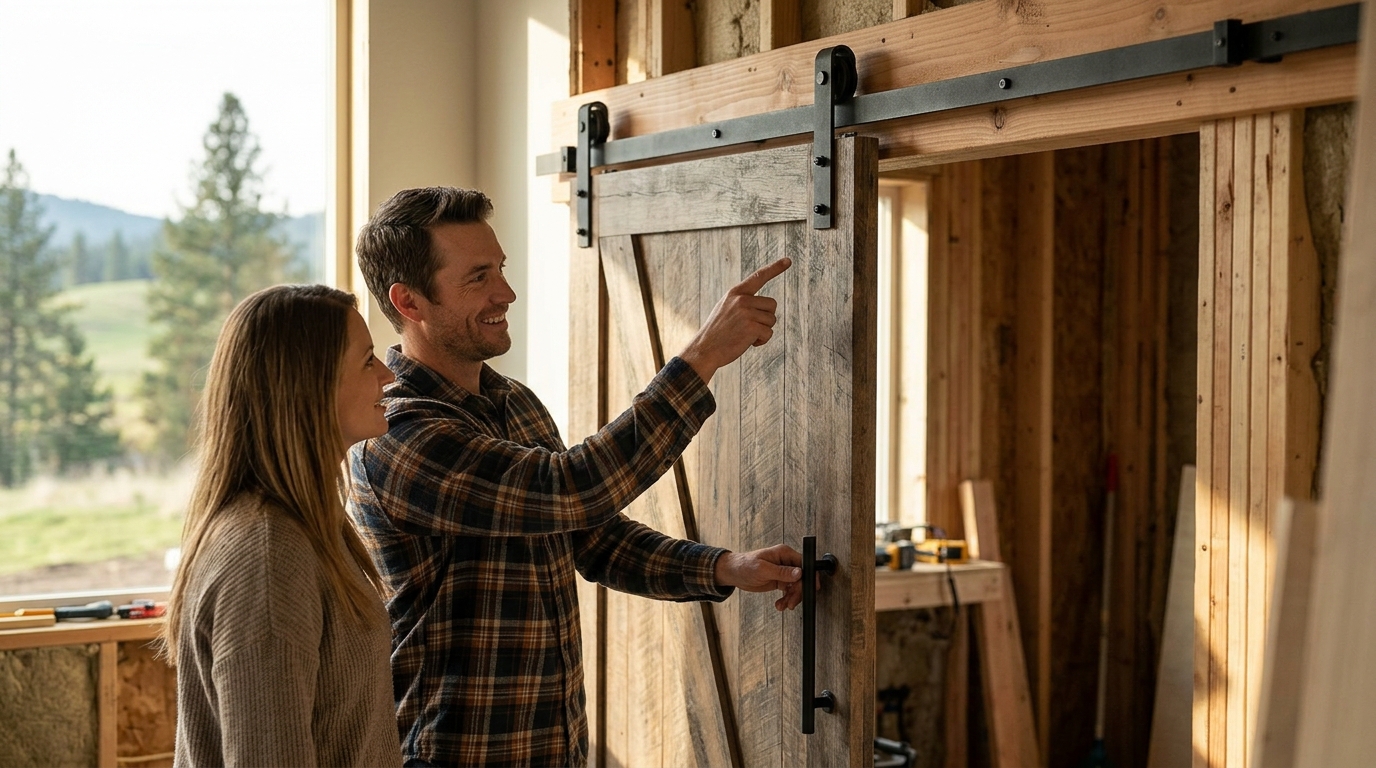
Choosing between a barn door track and a traditional pocket door system depends on your wall structure, aesthetic goals, and space constraints. Barn doors are exposed sliding systems that mount to the wall surface, while pocket doors are concealed sliding systems that disappear into the wall cavity. For homeowners in the Rogue Valley, understanding these mechanical differences is critical before ordering hardware. Moore's Doors helps customers evaluate these options to ensure the chosen system fits the existing framing and project timeline.
Structural Requirements and Wall Cavity Space
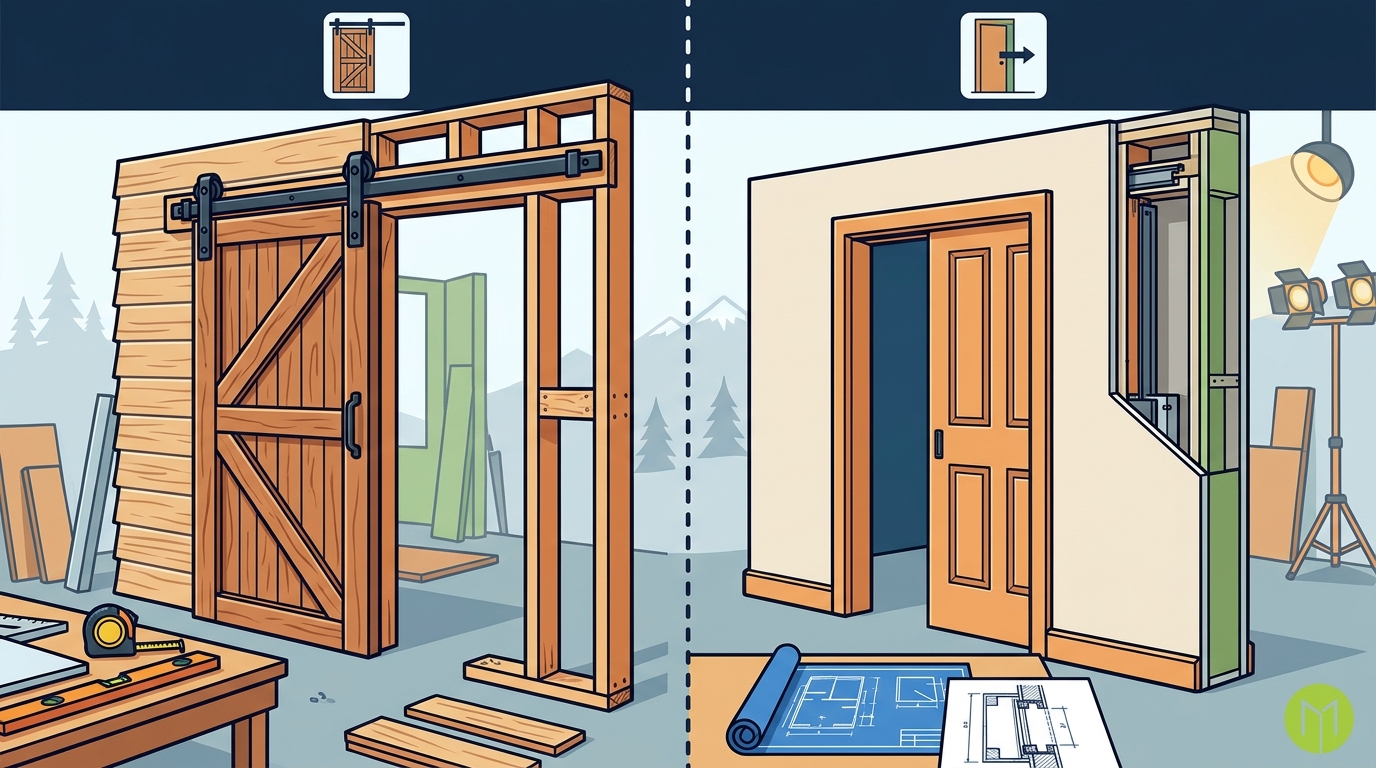
The most significant difference between these two systems is how they interact with your home's framing. A traditional pocket door requires a dedicated wall cavity to house the door when it is open. This means the wall must be wide enough to accommodate the door's thickness plus the track mechanism. If you are working with a standard 2x4 stud wall, a pocket door is often impossible unless the wall is widened or a new stud is added. In contrast, a barn door track mounts directly to the face of the wall or a dedicated support beam. It does not require any space inside the wall cavity. This makes barn doors ideal for retrofit projects where opening up the wall is not an option.
Aesthetic Impact and Design Flexibility
Barn door tracks are a design statement in themselves. The hardware, including the track, rollers, and end stops, is fully visible. This style is popular in rustic, industrial, and modern farmhouse interiors. The track can be made from steel, wood, or other materials, allowing for significant customization. A traditional pocket door, by contrast, is completely hidden when open. The only visible elements are the door itself and the pull handle. This makes pocket doors a better choice for minimalist or traditional interiors where hardware visibility is undesirable.
When selecting a barn door, the track length must be at least 1.5 times the width of the door to allow for proper sliding clearance. This means a 36-inch door requires a track of at least 54 inches. This visible track length is a major design consideration. For pocket doors, the track is hidden inside the wall, so the only visible component is the door slab. This allows for a seamless look that integrates with the surrounding trim and molding.
Hardware Compatibility and Load Capacity
Both systems rely on rollers and tracks, but the engineering requirements differ. Barn door tracks must support the full weight of the door on a single exposed rail. The hardware must be rated for the specific door weight, which can vary significantly depending on the material. A solid wood barn door can weigh over 100 pounds, requiring heavy-duty steel tracks and robust rollers. Traditional pocket door systems use a different type of track that is mounted inside the wall. These tracks are designed to support the door while allowing it to slide smoothly into the cavity. The hardware is less visible, so the focus is on smooth operation and quiet movement rather than aesthetic appeal.
Moore's Doors supplies both types of hardware and can help you determine the correct load rating for your specific door. The team can review your door's dimensions and material to recommend the appropriate track and roller system. This ensures that the hardware will perform reliably over time without sagging or sticking.
Installation Complexity and Professional Support
Installing a barn door track is generally more straightforward than installing a pocket door system. The track mounts to the wall surface, and the door hangs from the track using brackets. This process does not require modifying the wall structure. However, precise alignment is critical to ensure the door slides smoothly and does not rub against the floor or wall. A pocket door installation is more complex because it requires modifying the wall framing. The track is mounted inside the wall, and the door is hung from the track using a specialized hanger. This process requires careful measurement and framing adjustments to ensure the door fits properly within the cavity.
For customers in Medford and the Rogue Valley, Moore's Doors offers free on-site estimates to help determine the best installation approach. The team can review your wall structure and recommend the most practical system for your project. This guidance helps avoid costly mistakes and ensures a successful installation. according to The Top Fun
Cost Considerations and Long-Term Value
The cost of a barn door system is typically lower than a traditional pocket door system. This is because the hardware is simpler and the installation is less labor-intensive. However, the cost of the door slab itself can vary widely depending on the material and finish. A custom wood barn door can be more expensive than a standard interior door. Pocket door systems require more specialized hardware and framing modifications, which can increase the overall project cost. The long-term value of each system depends on its durability and maintenance requirements. Barn door tracks are exposed, so they are more susceptible to dust and debris. Regular cleaning is required to ensure smooth operation. Pocket door tracks are hidden, so they are less exposed to environmental factors. This can result in lower maintenance requirements over time.
Key Takeaways
- Barn doors are exposed sliding systems that mount to the wall surface and do not require wall cavity space.
- Barn door tracks are a design statement and are popular in rustic and industrial interiors.
- Barn door hardware must be rated for the specific door weight, which can vary significantly by material.
- Installation complexity is lower for barn doors, but precise alignment is critical for smooth operation.
Traditional pocket doors are concealed sliding systems that disappear into the wall cavity and require wider wall sections.
Pocket doors offer a clean, seamless look and are better suited for minimalist or traditional interiors.
Pocket door hardware is designed for smooth, quiet operation and is less visible.
Frequently Asked Questions
Can I convert a pocket door to a barn door?
Yes, you can convert a pocket door to a barn door by removing the pocket door track and installing a barn door track on the wall surface. This requires removing the door from the pocket door hangers and attaching it to barn door brackets. The wall cavity space previously used for the pocket door can be filled in or left open.
Do barn doors require a dedicated wall stud?
Yes, barn door tracks must be mounted to a solid wall stud or a dedicated support beam. The track cannot be mounted to drywall alone because it must support the full weight of the door. You must locate the studs in the wall before installing the track.
Are pocket doors more expensive than barn doors?
Generally, yes. Pocket door systems require more specialized hardware and framing modifications, which can increase the overall project cost. However, the cost of the door slab itself can vary widely depending on the material and finish.
Can I use a barn door track for a heavy door?
Yes, but you must select a track and roller system rated for the specific door weight. A solid wood barn door can weigh over 100 pounds, requiring heavy-duty steel tracks and robust rollers. Moore's Doors can help you determine the correct load rating for your specific door.
What is the minimum track length for a barn door?
The track length must be at least 1.5 times the width of the door to allow for proper sliding clearance. For example, a 36-inch door requires a track of at least 54 inches. This ensures the door can slide fully open without hitting the wall or floor.
Conclusion
Choosing between a barn door track and a traditional pocket door system depends on your specific project needs. Barn doors offer a stylish, exposed solution that does not require wall cavity space, making them ideal for retrofits. Pocket doors provide a clean, concealed look that integrates seamlessly with your interior design. For homeowners and builders in the Rogue Valley, Moore's Doors provides expert guidance on both systems. Visit the Medford showroom or request a free on-site estimate to determine the best fit for your project.