
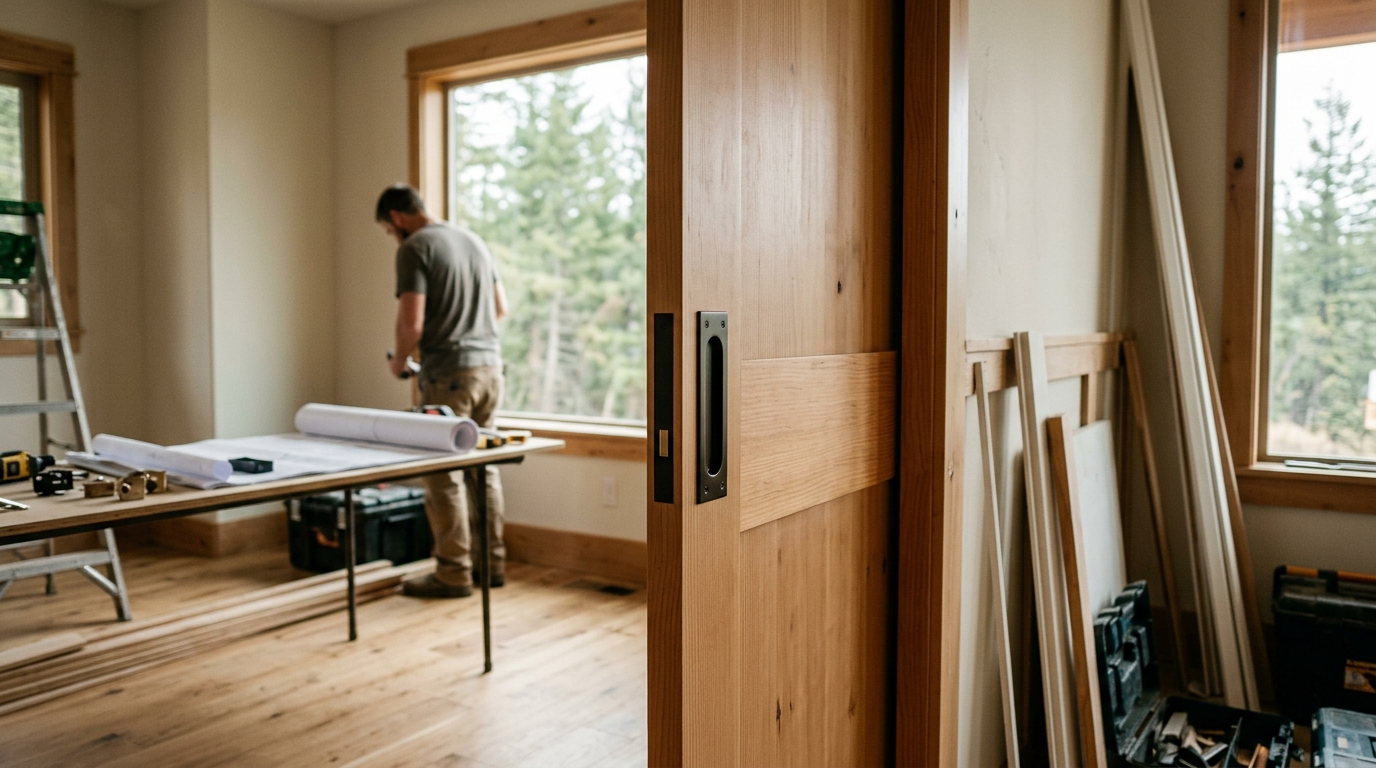
Homeowners in Southern Oregon should verify wall cavity depth, door weight, and track compatibility before purchasing pocket door hardware. A standard pocket door system requires a specific frame, track, and roller assembly that must fit within the existing wall structure. Moore's Doors provides local product guidance in Medford to help you select the correct components for your specific opening and project timeline.
Understanding the Pocket Door System
A pocket door is a sliding door that retracts into a wall cavity, saving floor space in tight rooms. Unlike hinged doors, these systems rely on a track and roller mechanism to move the panel smoothly. The hardware must support the full weight of the door while allowing it to slide into the wall without binding. In Southern Oregon remodels, where older homes often have specific framing constraints, understanding the mechanical requirements is critical.
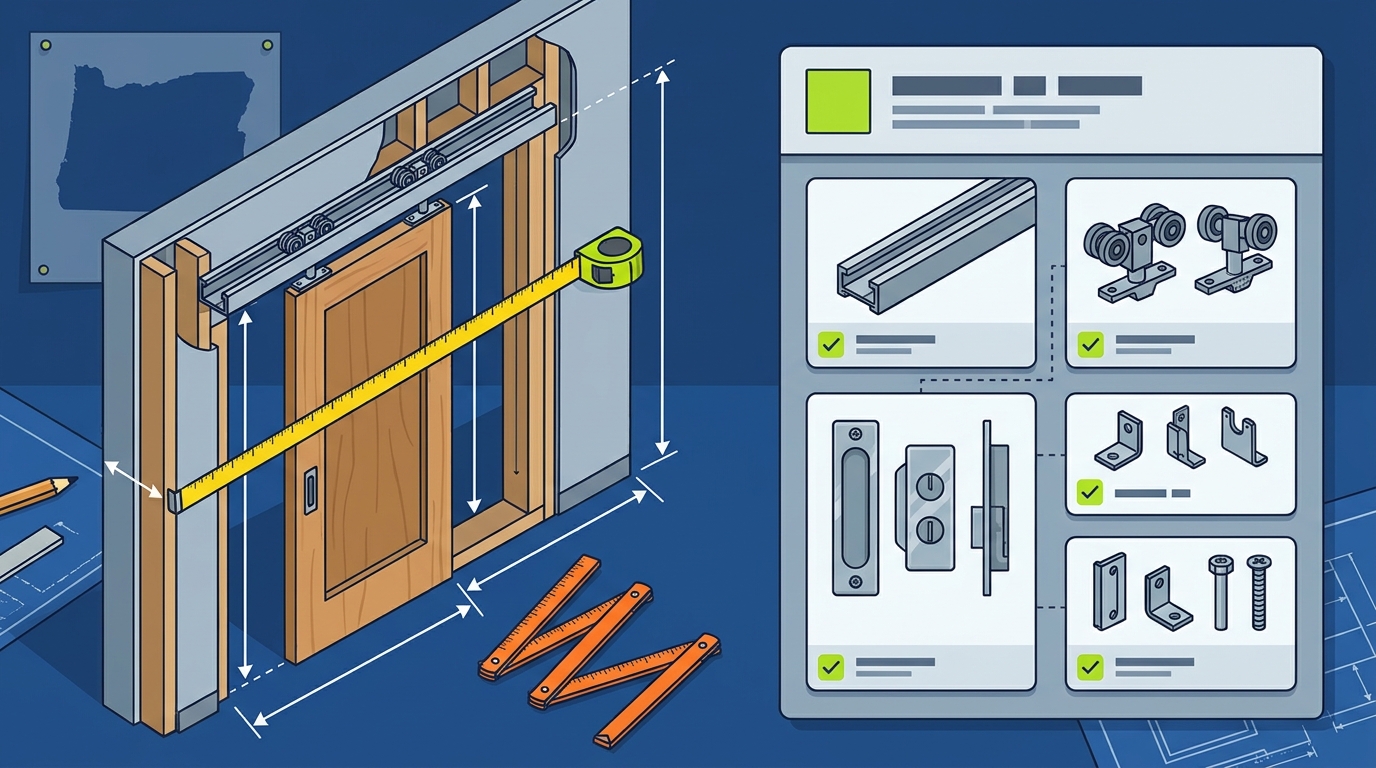
The core components include the track, rollers, and the frame assembly. The track is typically mounted at the top of the opening, while the rollers attach to the door slab. The frame assembly holds the door in place when it is fully retracted. Selecting the wrong track length or roller capacity can lead to operational issues or the need for custom fabrication. Moore's Doors helps customers review these components in their Medford showroom to ensure the hardware matches the door weight and wall depth.
Measuring Your Wall Cavity
Before buying any hardware, you must measure the depth of your wall cavity. Standard pocket door systems require a specific amount of space inside the wall to accommodate the door panel. If your wall is too shallow, a standard system will not fit, and you may need a custom solution or a different door type. Measure from the interior face of the wall to the opposite side, excluding drywall thickness, to get the true cavity depth.
Also measure the rough opening width and height. The pocket door frame must fit within these dimensions, and the track must span the entire width of the opening. In many Southern Oregon homes, especially those built before 1990, wall cavities may contain unexpected obstructions like electrical boxes or plumbing. Identifying these obstacles early prevents costly rework. The team at Moore's Doors can review your measurements or house plans to confirm if a standard pocket door system is viable for your specific opening.
Matching Hardware to Door Weight
Door weight is a primary factor in selecting the correct track and roller hardware. Lighter hollow-core doors require less robust hardware than heavy solid-core or wood doors. Using hardware rated for a lighter door on a heavier slab can cause the rollers to fail or the track to sag over time. Check the weight of your door slab and compare it to the maximum load rating of the hardware you are considering.
Choosing the Right Track and Rollers
When selecting rollers, consider the finish and compatibility with the track. Some systems use proprietary rollers that only fit specific tracks, while others use universal designs. It is essential to buy the track and rollers as a matched set to ensure proper fit and function. Moore's Doors offers a range of pocket door hardware and can guide you through the selection process based on your door size and weight.
Local Support and Installation Considerations
Installing pocket door hardware requires precision and attention to detail. The track must be level and securely mounted to the framing, and the rollers must be adjusted correctly to ensure the door hangs evenly. Misalignment can cause the door to rub against the frame or fail to latch properly. While some homeowners attempt DIY installation, professional installation is often recommended for complex systems.
Key Takeaways
- Verify wall cavity depth before purchasing pocket door hardware to ensure a standard system will fit.
- Match the track and roller capacity to the actual weight of your door slab.
- Buy the track and rollers as a matched set to ensure compatibility and smooth operation.
- Check for obstructions in the wall cavity, such as electrical boxes or plumbing, before ordering.
- Consider professional installation for complex systems to ensure proper alignment and function.
- Utilize local product guidance from suppliers like Moore's Doors to confirm hardware suitability.
Frequently Asked Questions
What is the minimum wall depth required for a pocket door?
The minimum wall depth required for a standard pocket door system is typically around 6 to 7 inches, excluding drywall. This allows enough space for the door panel to slide into the cavity. If your wall is shallower than this, you may need a custom system or a different door type. Always verify the specific requirements of the hardware you are purchasing.
Can I use any roller with any pocket door track?
No, you cannot use any roller with any pocket door track. Rollers and tracks are often designed as a matched set, and using incompatible components can lead to poor performance or failure. It is best to purchase the track and rollers from the same manufacturer or as a complete kit to ensure proper fit and function.
How much weight can a standard pocket door track support?
A standard pocket door track can typically support a significant amount of weight, depending on the specific model and roller configuration. Heavier doors require tracks and rollers with a higher load rating. Check the manufacturer's specifications to ensure the hardware can support the weight of your door slab with a safety margin.
Do I need to remove the drywall to install a pocket door?
In many cases, you do not need to remove the drywall to install a pocket door, provided the wall cavity is clear of obstructions. However, if there are electrical boxes or plumbing in the cavity, you may need to modify the wall structure. It is important to inspect the cavity before starting the installation to identify any potential issues.
Where can I find pocket door hardware in Southern Oregon?
You can find pocket door hardware at local suppliers like Moore's Doors in Medford. They offer a range of pocket door systems and can provide product guidance to help you select the correct components for your project. Their showroom allows you to see the hardware in person and ask questions about compatibility and installation. Learn more: Contact Moore s Doors.