
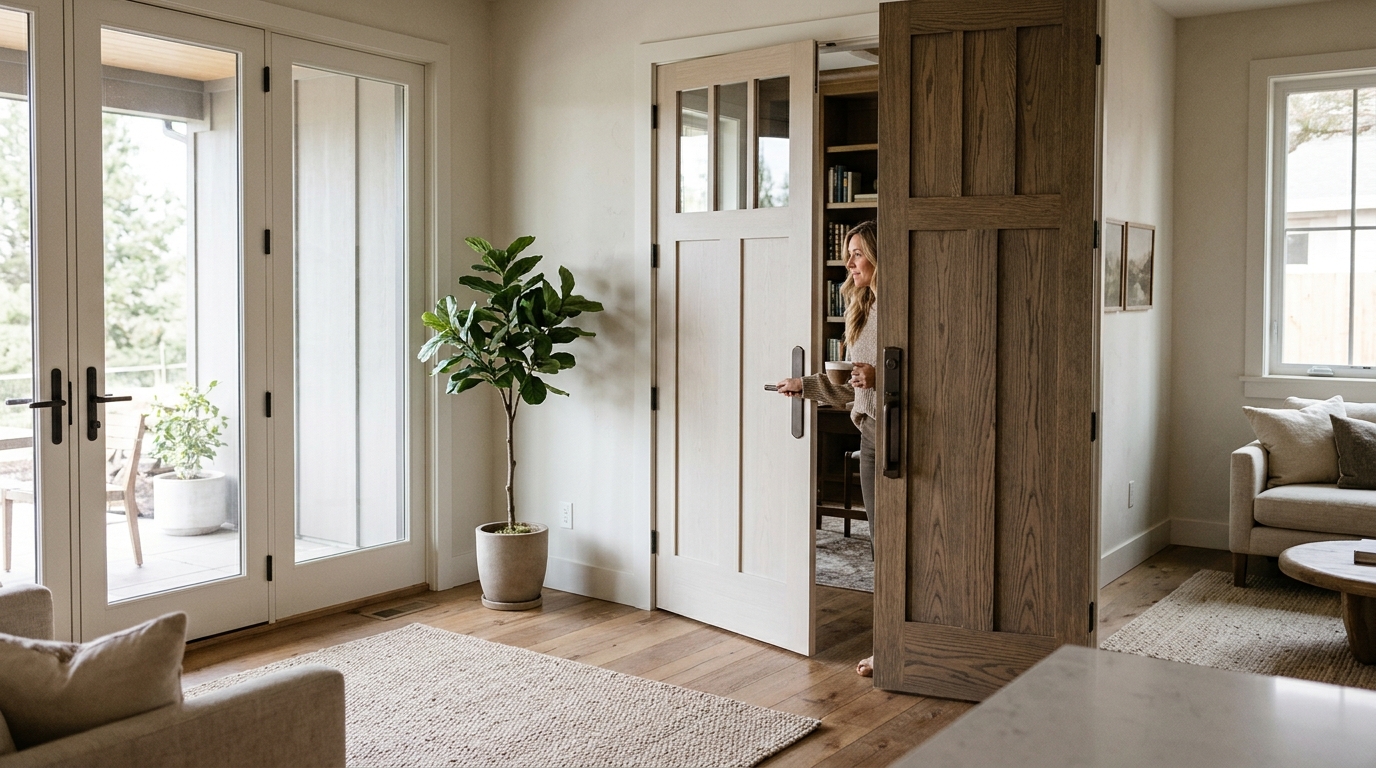
Homeowners often face confusion when selecting doors because the market offers distinct categories for internal and external use. Exterior doors prioritize security and weather resistance, while interior doors focus on aesthetics and space management. Understanding these differences helps you choose the right product for each opening in your home. Moore's Doors in Medford provides local guidance to help you match the correct door type to your specific project needs.
Exterior Door Categories and Materials
When selecting an exterior door, consider the climate in your region. In Southern Oregon, where humidity and temperature fluctuations are common, fiberglass and steel doors are popular choices for their stability. Moore's Doors supplies a range of exterior door products and can help you evaluate which material best fits your home's architecture and your maintenance preferences.
Interior Door Styles and Functions
Interior doors define the flow of space within a home. They are generally lighter than exterior doors and focus on design, privacy, and functionality. The two main categories of interior doors are hinged doors and sliding doors. Hinged doors swing open on a pivot, while sliding doors move along a track to save space.
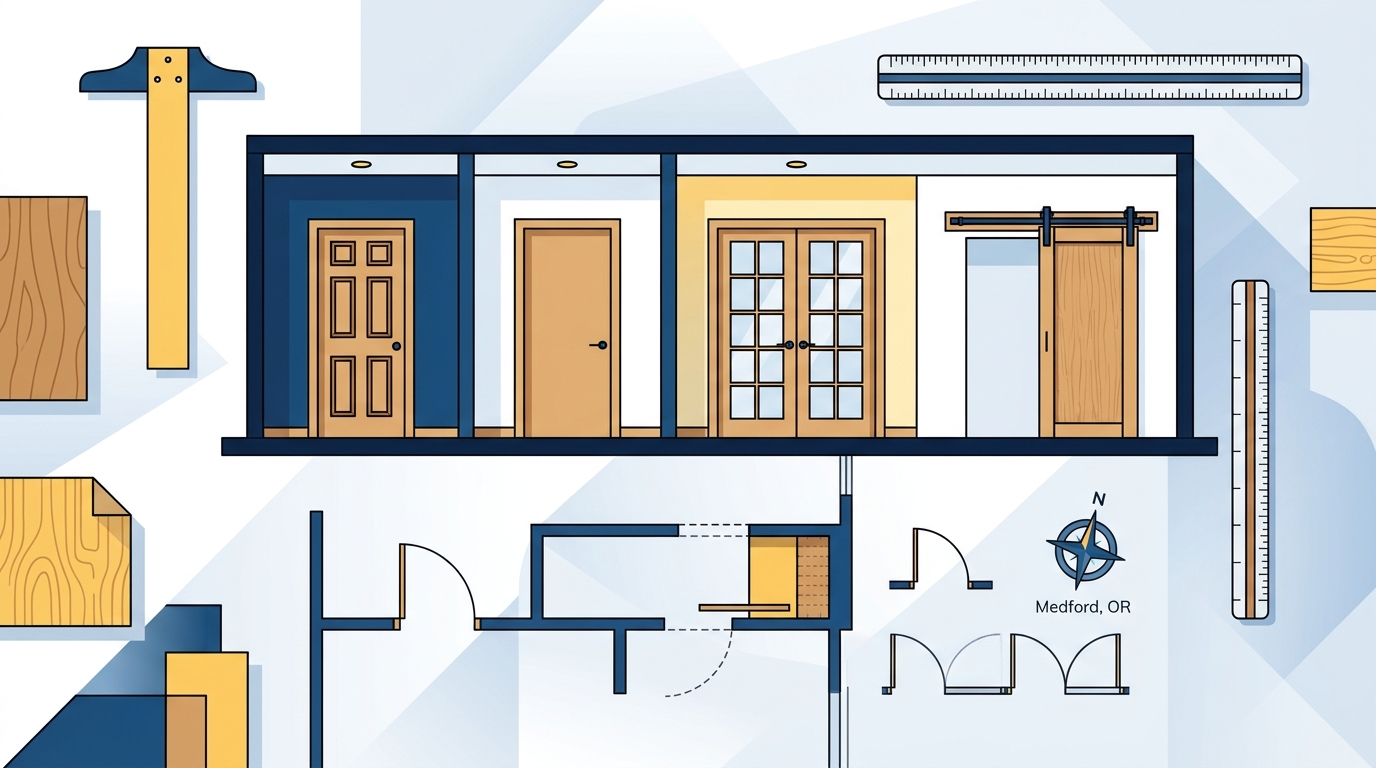
Hinged doors come in various panel configurations, such as six-panel, four-panel, or flush designs. The number of panels affects the visual weight of the door. A six-panel door offers a traditional look, while a flush door provides a modern, minimalist appearance. Sliding doors, including pocket doors and barn doors, are ideal for smaller rooms or areas where a swinging door would obstruct traffic flow.
Pocket doors slide into the wall cavity, making them perfect for closets or small bathrooms. Barn doors mount on a track above the opening and are often used for decorative purposes in living spaces. The choice between hinged and sliding doors depends on the available floor space and the desired aesthetic. Moore's Doors offers both hinged and sliding door options, including pocket doors and patio doors, to suit various interior layouts.
Slab Doors vs. Prehung Units
When purchasing a door, you will encounter two primary product formats: slab doors and prehung units. A slab door is the door panel alone, without a frame. A prehung unit includes the door panel attached to a frame with hinges already installed. Understanding the difference is crucial for planning your installation.
Slab doors are typically used when the existing door frame is in good condition and can be reused. This option is often more cost-effective because you only need to buy the new panel and hardware. However, you must ensure that the slab dimensions match the existing frame and that the hinge and lock preparations are compatible. Prehung units are recommended when the existing frame is damaged, warped, or when you are creating a new opening. They provide a complete assembly that is easier to install and ensures proper alignment.
Choosing between a slab and a prehung unit depends on the condition of your current opening. If you are replacing a door in a well-maintained frame, a slab may be sufficient. If the frame is compromised, a prehung unit is the safer choice. Moore's Doors can help you determine which format is appropriate for your project by reviewing your measurements and the condition of your existing openings.
Specialty Door Types for Specific Needs
Beyond standard hinged and sliding doors, several specialty door types address specific functional or aesthetic needs. These include pocket doors, barn doors, and custom-sized doors. Each specialty type requires careful planning to ensure it fits the space and meets the project goals.
Pocket doors are a space-saving solution that slides into the wall. They require specific framing and track systems, so they are best planned during new construction or major remodeling. Barn doors are decorative sliding doors that mount on a track above the opening. They are often used for closets, pantries, or as room dividers. Custom-sized doors are necessary when standard dimensions do not fit the opening. This can happen in older homes with nonstandard door sizes or in new construction with unique architectural features.
Specialty doors often require custom preparation, such as resizing, hinge routing, or lockset installation. Moore's Doors has in-house door machine capabilities that allow for custom preparation and re-hanging support. This means you can bring a nonstandard door or a door that needs to be adapted for a different opening, and the team can prepare it to fit your specific requirements.
Hardware and Finish Considerations
The hardware and finish of a door significantly impact its function and appearance. Hardware includes handles, locks, hinges, and other components that allow the door to operate. The finish refers to the surface treatment, such as paint, stain, or a factory-applied coating. Selecting the right hardware and finish ensures that the door operates smoothly and complements the surrounding space.
For exterior doors, hardware must be weather-resistant and secure. Deadbolts and high-quality hinges are essential for security. For interior doors, hardware can be more decorative. Passage hardware is used for doors that do not need to lock, such as hallways. Privacy hardware is used for bathrooms and bedrooms. The finish should match the existing trim and flooring in the room. For exterior doors, the finish should be durable and able to withstand the elements.
Moore's Doors supplies a wide range of hardware and trim products to complement your door selection. The team can help you choose compatible hardware and finishes that match your door and the rest of your home. By coordinating the door, hardware, and trim, you create a cohesive and professional look.
Key Takeaways
- Exterior doors prioritize security and weather resistance, with common materials including wood, fiberglass, and steel.
- Interior doors focus on aesthetics and space management, with hinged and sliding doors being the main categories.
- Slab doors are the panel alone, while prehung units include the frame and hinges.
- Specialty doors like pocket and barn doors require specific planning and framing.
- Hardware and finish choices should complement the door and the surrounding space.
- Moore's Doors provides local guidance and custom preparation for doors in the Rogue Valley.
Frequently Asked Questions
What is the difference between a slab door and a prehung door?
A slab door is the door panel without a frame, while a prehung door includes the panel attached to a frame with hinges. Slab doors are used when the existing frame is in good condition, and prehung doors are used when a new frame is needed.
What are the best materials for exterior doors in Southern Oregon?
Fiberglass and steel are popular choices for exterior doors in Southern Oregon due to their durability and resistance to moisture and temperature changes. Wood is also an option but requires more maintenance.
Can I use a pocket door in an existing wall?
It is possible to install a pocket door in an existing wall, but it requires specific framing and track systems. It is best planned during new construction or major remodeling to ensure proper installation.
What is door re-hanging?
Door re-hanging is the process of preparing an existing door for use in a different frame or opening. This may involve resizing, hinge routing, or lockset installation.
Does Moore's Doors offer custom door preparation?
Yes, Moore's Doors has in-house door machine capabilities that allow for custom preparation, including resizing, hinge routing, and lockset installation for eligible doors.
Where can I find door hardware in Medford?
Moore's Doors in Medford supplies a wide range of door hardware, including handles, locks, hinges, and replacement parts, for both residential and commercial projects.
Conclusion
Selecting the right doors for your home involves understanding the different types, materials, and product formats available. Exterior doors require durability and security, while interior doors focus on aesthetics and space management. Whether you need a standard hinged door, a space-saving pocket door, or a custom-sized specialty door, the right choice depends on your specific project needs. Moore's Doors in Medford provides local expertise and product guidance to help you make informed decisions. Visit the showroom or request an estimate to discuss your door project with the team.