
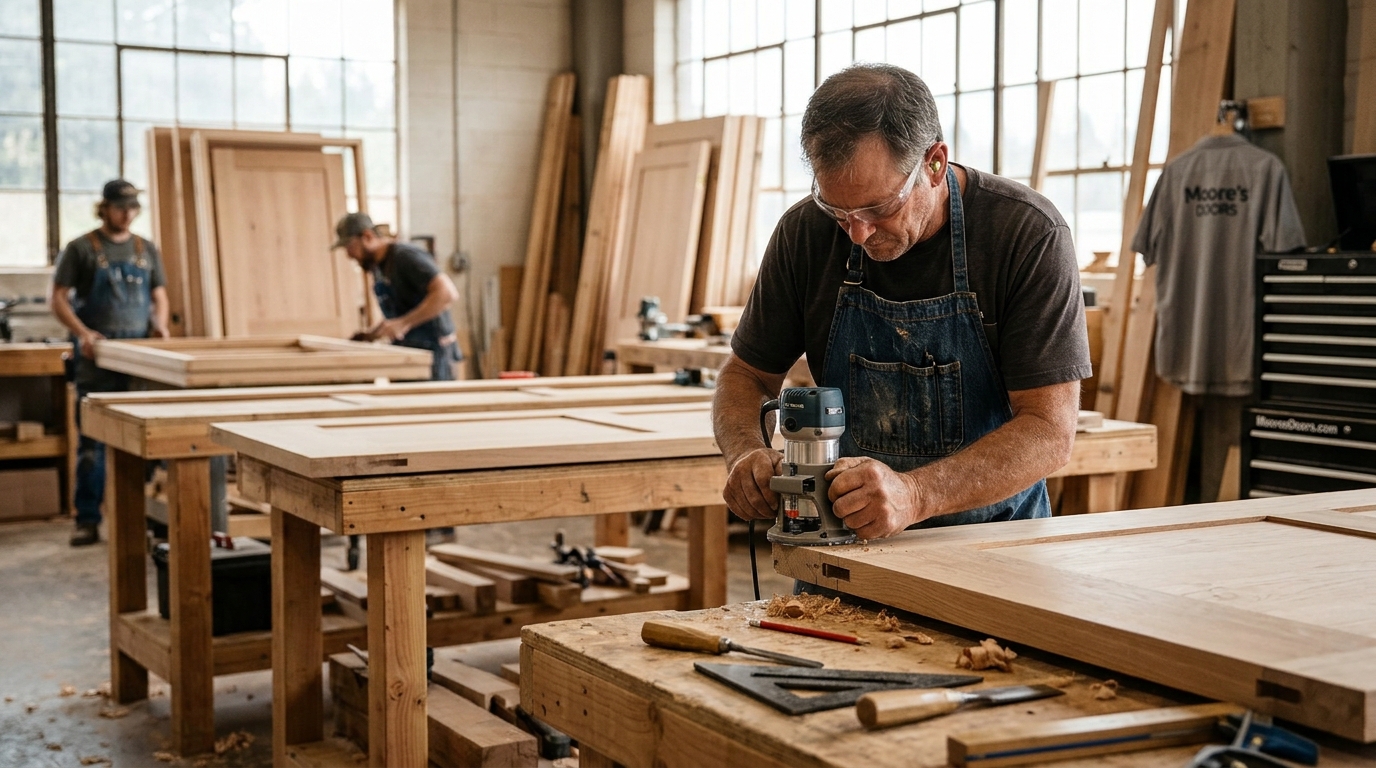
Professional door preparation is the process of modifying a raw door slab to fit a specific opening and function within a building. For construction projects in the Rogue Valley, this phase bridges the gap between a standard manufacturer product and a fully installed architectural element. Moore's Doors in Medford handles these technical steps to ensure builders and homeowners receive products that fit their plans exactly.
1. Verify Opening Dimensions and Rough Measurements
Accurate initial measurements prevent costly rework and delays. The first step in any preparation workflow is confirming the rough opening size, including height, width, and depth. Builders must compare these field measurements against the house plans to identify any discrepancies. If the existing frame or opening does not match the standard product size, the team must flag this immediately to determine if a custom size is required.
2. Select the Appropriate Door Material and Style
Material choice dictates the preparation methods and final durability. A door slab is the door panel without an attached frame, and its material affects how it can be cut or routed. Builders choose between wood, steel, fiberglass, or composite materials based on the room's function and the project's aesthetic goals. The selected material must be compatible with the planned hardware and the environmental conditions of the opening.
3. Determine Hinge Placement and Handing
Correct handing ensures the door swings in the intended direction. Hinge placement is a critical preparation step that involves routing the door edge for the specific hinge size and location. The team must identify the door's handing, which refers to whether it opens left or right and in or out. This decision impacts the layout of the hinges and must align with the architectural drawings and safety codes.
4. Route Locksets and Bore Holes
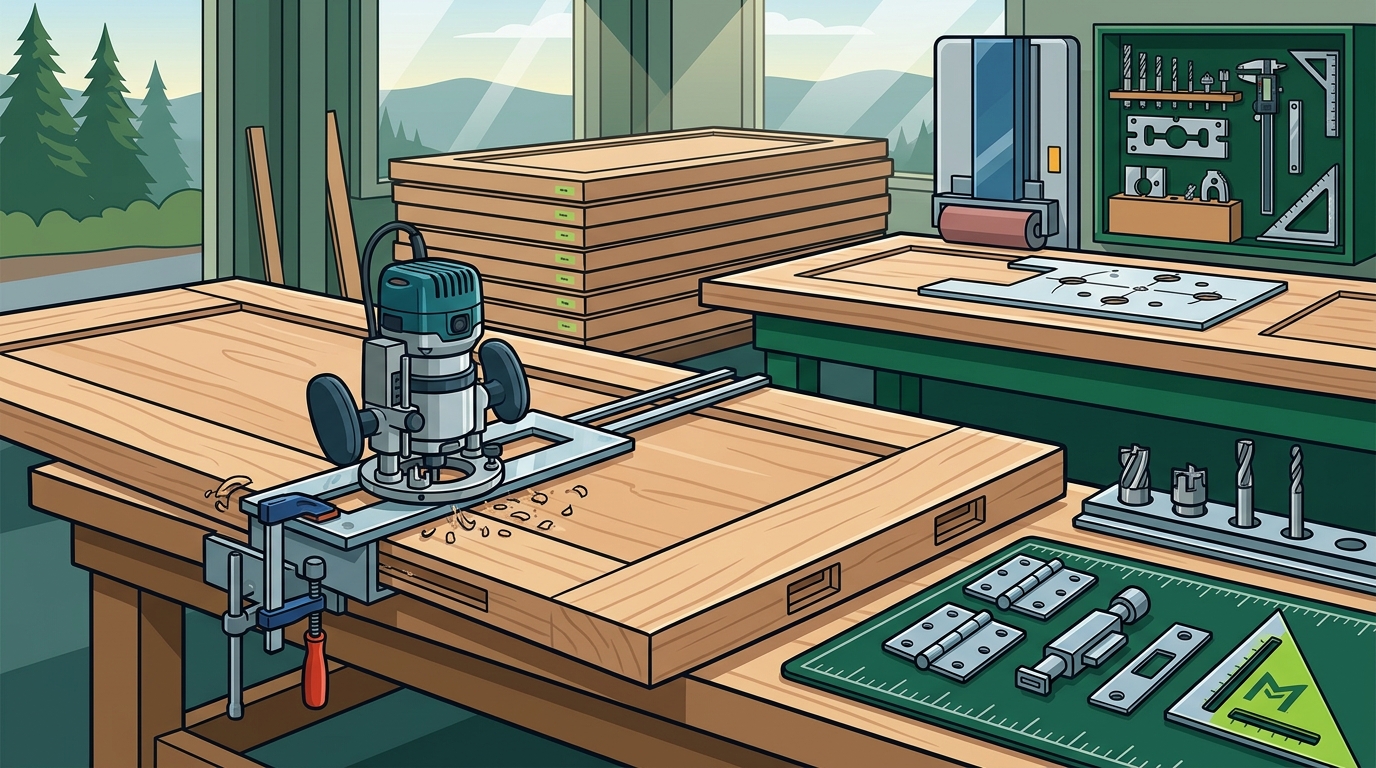
Precise boring ensures hardware functions smoothly and securely. Lockset preparation is the process of drilling the necessary holes for the handle, lock, and latch mechanism. This requires exact measurements for the backset, bore diameter, and edge cut. Using a specialized door machine allows for consistent and clean cuts that standard hand tools often cannot achieve, ensuring the hardware sits flush with the door surface.
5. Coordinate Hardware Compatibility and Finish
Hardware must match the door's preparation and project aesthetic. Door hardware is the collection of functional components, including handles, locks, and hinges, that allow the door to operate. The finish of the hardware should coordinate with the door and surrounding trim to create a cohesive look. Builders should verify that the selected hardware is compatible with the door's thickness and material before the preparation is finalized.
6. Perform Custom Sizing and Edge Preparation
7. Conduct Final Quality Control and Inspection
A final inspection confirms the door is ready for installation. Before the door leaves the preparation area, it undergoes a quality control check to verify all dimensions and hardware placements. The team inspects the surface for any damage or imperfections that may have occurred during the cutting process. This final step ensures that the product meets the project specifications and is ready for the installation phase.
Choosing the Right Preparation Path
Frequently Asked Questions
What is the difference between a slab and a prehung door?
A slab is the door panel alone, while a prehung door includes the frame and hinges. Slabs require more on-site preparation and are often used when the existing frame is in good condition. Prehung units are faster to install but require a new or modified rough opening.
Can any door be resized for a different opening?
Not every door can be resized, as it depends on the material, thickness, and existing hardware placement. A professional evaluation is needed to determine if the door can be adapted or if a new product is required. The structural integrity of the door must be maintained during any resizing process.
What tools are used for professional door preparation?
Professional preparation uses specialized door machines that can route hinges, bore locksets, and trim edges with precision. These tools ensure consistency and accuracy that is difficult to achieve with manual methods. The use of such equipment is common in local supply houses that offer custom preparation services.
How long does door preparation take?
The time required depends on the complexity of the preparation and the volume of doors in the project. Simple hardware installation may take minutes, while custom sizing and multiple hardware placements can take longer. Builders should account for preparation time in their project schedules to avoid delays.