
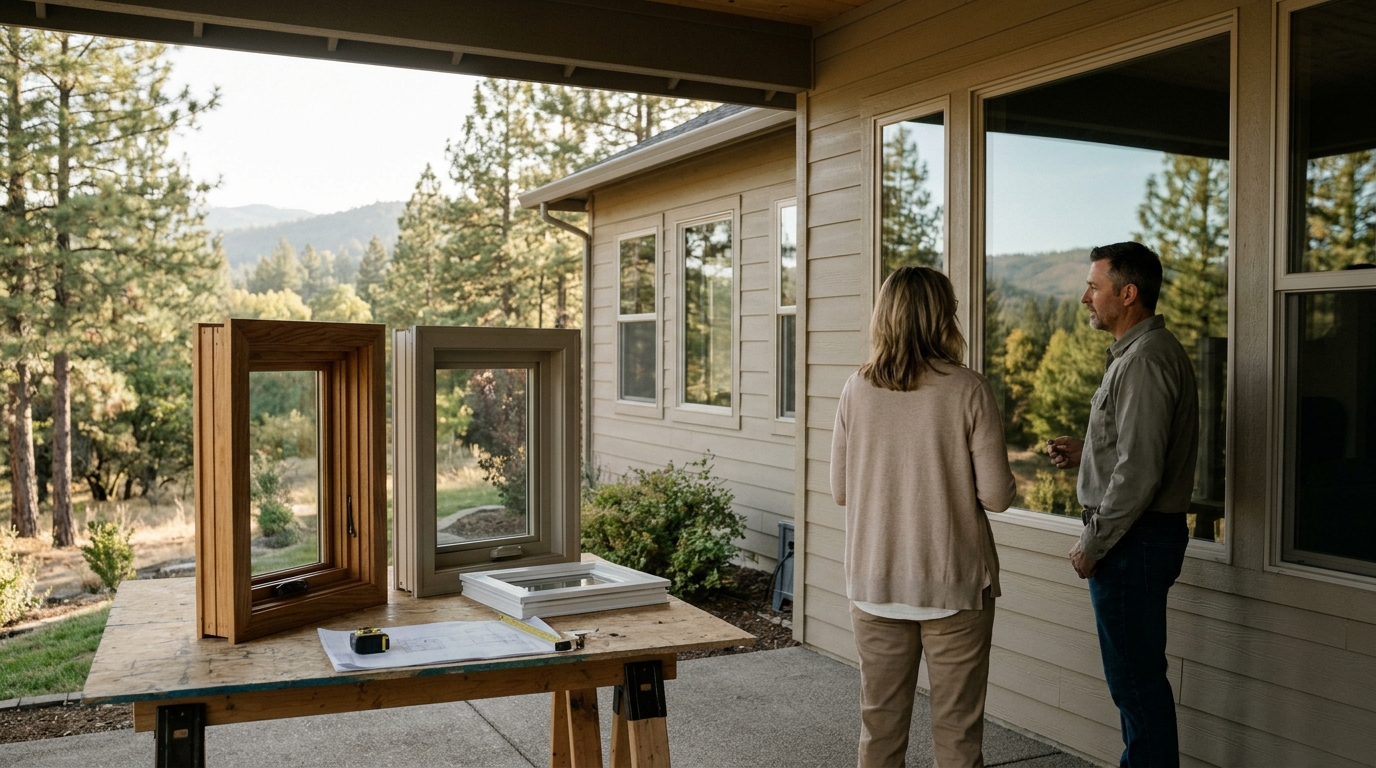
Vinyl Replacement Windows
Vinyl is a synthetic material that resists moisture, rot, and insect damage. In the Medford climate, where humidity and seasonal temperature swings can stress building materials, vinyl holds its shape and finish without the need for repainting. The primary strength of vinyl is its low maintenance profile. Homeowners do not need to sand, prime, or paint the frames, which saves significant time and money over the life of the window. The limit of vinyl is aesthetic flexibility. While modern vinyl windows offer good color options, they generally lack the deep, rich grain and custom finishing capabilities of wood. This option suits homeowners who prioritize energy efficiency, durability, and a hands-off maintenance schedule. To discuss your specific window needs, contact our team.
Wood Replacement Windows
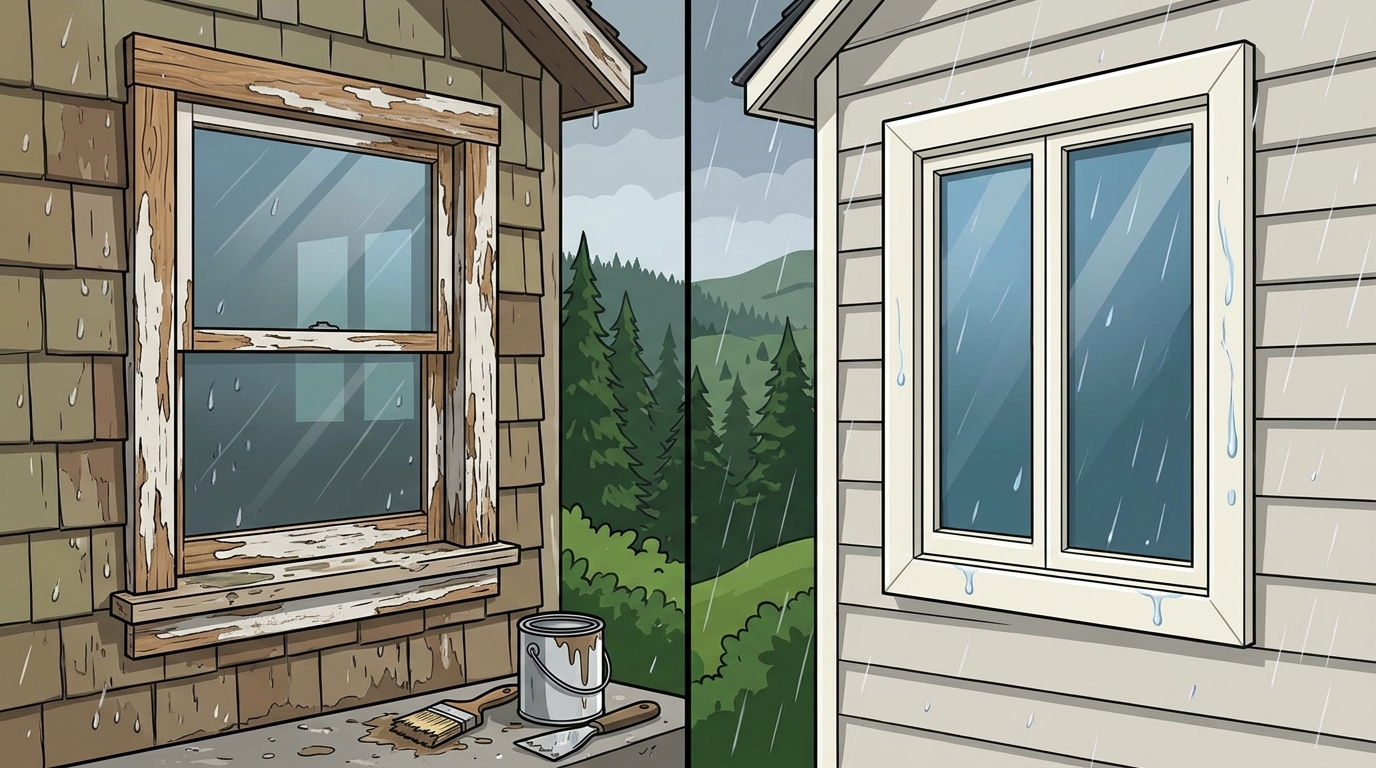
Wood is a natural material that offers superior aesthetic appeal and the ability to be custom stained or painted to match any interior or exterior design. Wood windows are often associated with high-end architectural styles and provide a warm, classic look that synthetic materials cannot fully replicate. The primary limit of wood is maintenance. To prevent rot, swelling, and paint failure, wood frames require periodic sanding and repainting, especially in the damp conditions of Southern Oregon. This ongoing upkeep increases the total cost of ownership. This option suits homeowners who value architectural detail, plan to stay in their home for a long period, and have the budget for regular professional maintenance. For more information on our local expertise, learn about Moore's Doors.
Cost Comparison: Vinyl vs. Wood
The following table compares the key factors affecting the long-term cost of vinyl and wood replacement windows in the Medford area. For a full overview of our offerings, explore our door, window, trim, and hardware services.
| Criteria | Vinyl Windows | Wood Windows |
|---|---|---|
| Upfront Cost | Lower | Higher |
| Maintenance Frequency | Minimal (cleaning only) | High (painting/staining every 5-10 years) |
| Lifetime Cost | Lower | Higher |
| Climate Durability | High (resists rot and moisture) | Moderate (requires protection from moisture) |
| Aesthetic Customization | Limited (standard colors) | High (custom stain/paint) |
Choose Vinyl If...
Choose vinyl if you want to minimize long-term maintenance costs. If you plan to sell your home in the next 10 to 20 years, vinyl windows are a strong value proposition because they require no repainting. They are also ideal for homeowners who want a durable product that can handle the local weather without constant attention. If your priority is energy efficiency with a lower initial investment, vinyl is the practical choice.
Choose Wood If...
Choose wood if you prioritize architectural aesthetics and custom finishes. If your home features a specific design style that requires wood grain or custom staining, wood windows provide a level of detail that vinyl cannot match. This option is best for homeowners who are willing to invest in regular maintenance to preserve the beauty and longevity of the wood. If you have the budget for professional painting or staining every few years, wood can be a rewarding long-term investment. To see where we operate, view our Rogue Valley service areas.
Frequently Asked Questions
Do wood windows cost more to install than vinyl?
Yes, wood windows typically have a higher upfront cost for both materials and installation. The labor cost is similar, but the material price for wood is significantly higher than vinyl. This initial difference is the main factor in the higher lifetime cost of wood windows.
How often do wood windows need to be repainted in Medford?
In the Medford climate, wood windows generally need to be repainted or restained every 5 to 10 years. The frequency depends on the quality of the initial finish and the exposure to sun and moisture. Regular inspection is recommended to prevent rot and paint failure.
Can vinyl windows be painted?
Most standard vinyl windows are not designed to be painted. The paint may not adhere properly and can peel or crack over time. If you want a specific color, it is best to choose a vinyl window that comes in that color from the manufacturer.
Which material is more energy efficient?
Both vinyl and wood can be highly energy efficient when properly constructed. Vinyl is a natural insulator, while wood has good thermal performance. The energy efficiency of the window depends more on the glass package and frame construction than the frame material alone.
Is it worth switching from wood to vinyl for resale value?
Switching from wood to vinyl can be a smart financial move if the wood windows are in poor condition. Vinyl windows are a popular choice for buyers because they require less maintenance. However, if your home is a high-end property where wood windows are a key feature, keeping them in good condition may be more valuable.