
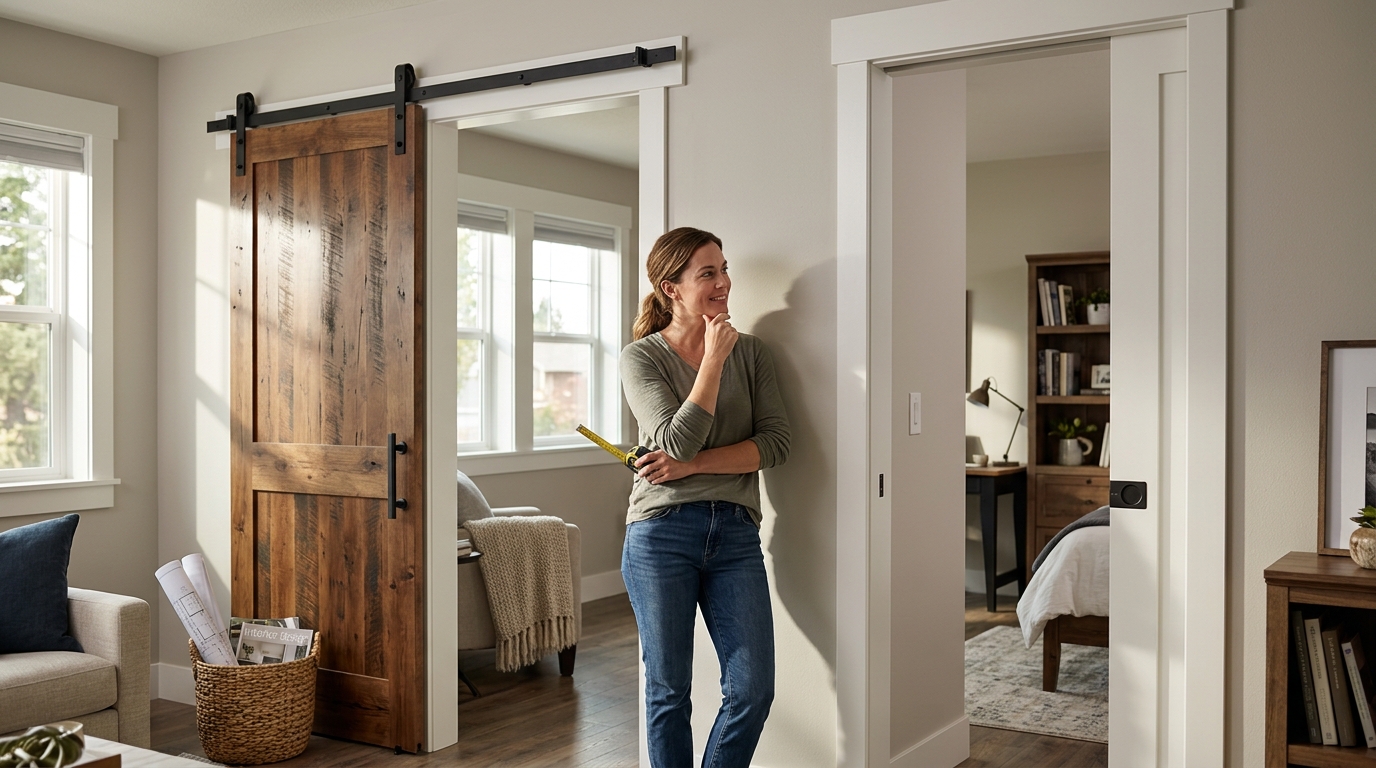
Choosing between barn door tracks and pocket door systems depends on your wall structure, available floor space, and aesthetic goals. Barn doors slide along an exposed track on the wall, while pocket doors disappear into the wall cavity. The right choice requires evaluating framing depth, hardware weight capacity, and the visual impact of the hardware on your room. For additional details, review the About Moore s Doors.
Structural Requirements and Wall Cavity Depth
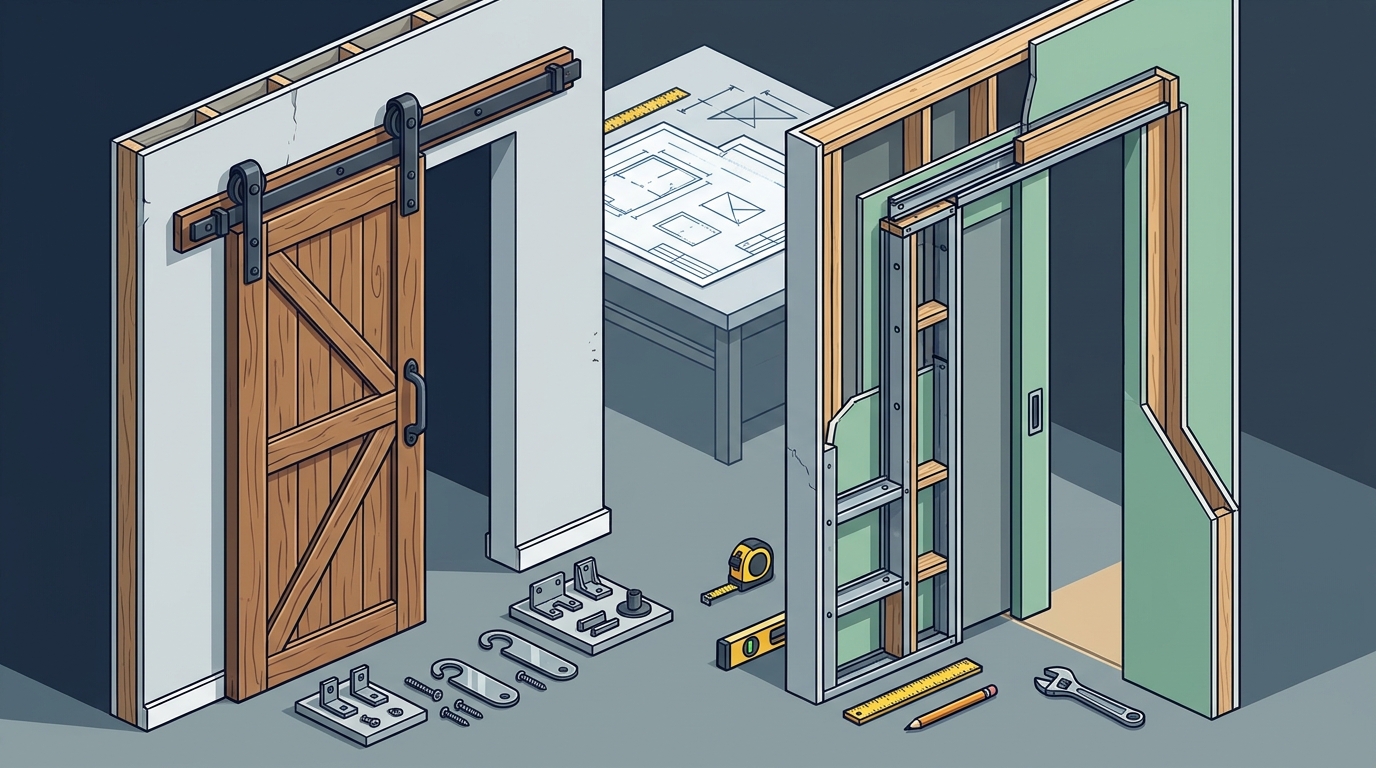
The most critical difference between these two systems is how they interact with your existing wall structure. A barn door track is a surface-mounted system that requires minimal alteration to the wall framing. It typically needs only a sturdy header or a dedicated track mounting board attached to the studs. This makes it an ideal solution for older homes or spaces where opening up the wall is not feasible.
In contrast, a pocket door system is a concealed installation that requires a specific type of wall framing. The door slides into a void within the wall, which means the wall must be at least one door-width deeper than a standard wall to accommodate the sliding mechanism. If you are working with a standard 4-inch or 6-inch wall, a pocket door is generally not possible without significant structural modification. For projects in the Rogue Valley where older homes often have standard framing, barn doors offer a much simpler path to a sliding door solution.
Hardware Visibility and Aesthetic Impact
The visual presentation of the hardware is a major factor in the final look of the room. Barn door hardware is an exposed design element. The track, brackets, and rollers are visible and often serve as a focal point in the room's design. This style is popular in rustic, industrial, and modern farmhouse interiors. The hardware must be chosen to complement the door material and the surrounding decor, as it cannot be hidden.
Pocket door hardware, on the other hand, is entirely concealed within the wall. The only visible components are the door itself and any pulls or handles you choose to install. This creates a clean, minimalist look that is ideal for contemporary spaces or rooms where you want to maximize the sense of openness without adding visual clutter. If your design goal is a seamless transition between rooms, the pocket door is the superior choice because it leaves no external hardware to distract from the architecture.
Floor Space and Clearance Considerations
Both systems save floor space compared to a traditional hinged door, but they do so in different ways. A barn door slides along the wall, which means it requires clear wall space on one side of the opening. You must ensure that the wall area where the door will rest is free of windows, outlets, or furniture that would interfere with the door's path. The door remains visible in its closed position, taking up the full width of the opening plus the length of the door itself.
A pocket door slides into the wall, so in its closed position, it occupies no floor space in the room. This is particularly beneficial in small rooms or tight hallways where every inch of floor space is valuable. However, you must consider the swing path of the door as it enters the wall. The door must have enough clearance to slide into the cavity without hitting the floor or the top of the frame. For homeowners in Medford and Central Point looking to open up a small bedroom or bathroom, the pocket door often provides a more functional layout.
Weight Capacity and Door Material Selection
The type of door you choose is heavily influenced by the track system. Barn door tracks are designed to support a wide range of door weights, from lightweight hollow-core doors to heavy solid wood or metal doors. The hardware is rated for specific weight capacities, and it is essential to match the track to the door's weight to ensure smooth operation and longevity. Heavier doors require more robust brackets and rollers to prevent sagging or binding.
Pocket door systems have more limited weight capacities due to the constraints of the wall cavity. The rollers and track inside the wall must support the door's weight while allowing it to slide smoothly within a confined space. This often limits the choice of door materials to lighter options, such as hollow-core or lightweight solid-core doors. If you want to use a heavy, solid wood door, a barn door track is usually the only viable option. At Moore's Doors, we can help you determine the weight of your chosen door and select the appropriate hardware to ensure it operates correctly.
Cost and Installation Complexity
The cost of installation varies significantly between the two systems. Barn door hardware is generally less expensive than pocket door systems. The installation is also simpler and can often be completed by a skilled DIYer. You do not need to open up the wall or modify the framing, which saves time and labor costs. The main expense is the hardware itself, which can range from basic to high-end decorative styles.
Pocket door systems are more expensive due to the specialized hardware and the labor required for installation. The wall must be opened to install the track and frame, which involves drywall work, painting, and potentially electrical adjustments. This makes the installation more complex and time-consuming. For a professional installation, you can expect to pay more for the labor involved in modifying the wall. If you are planning a new construction project, a pocket door can be integrated into the framing plan, which reduces the overall cost compared to a retrofit.
Key Takeaways
- Barn doors require exposed wall space and are ideal for standard wall framing.
- Pocket doors require a deepened wall cavity and are best for new construction or major remodels.
- Barn door hardware is visible and serves as a design element.
- Pocket door hardware is concealed and creates a clean, minimalist look.
- Barn doors support heavier door materials than pocket door systems.
- Pocket doors save more floor space in the room but require wall modification.
- Cost and labor are generally lower for barn door installations.
Frequently Asked Questions
Can I convert a standard wall to a pocket door?
Converting a standard wall to a pocket door is possible but requires significant structural modification. You must deepen the wall cavity to accommodate the door's sliding path. This involves removing drywall, adding framing, and potentially adjusting electrical wiring. It is a major project that is best planned during new construction or a full remodel.
What is the weight limit for a barn door track?
The weight limit for a barn door track varies by manufacturer and model. Most standard tracks support doors weighing between 150 and 250 pounds. Heavy-duty tracks can support up to 400 pounds or more. Always check the manufacturer's specifications to ensure the track can support the weight of your specific door.
Do pocket doors need a header?
Yes, pocket doors require a header to support the weight of the door and the track system. The header must be strong enough to hold the track and the door's weight. In new construction, the header is built into the framing. In a retrofit, you may need to install a new header or reinforce the existing one.
Which is better for a small room?
A pocket door is generally better for a small room because it saves floor space. The door slides into the wall, leaving the entire floor area open. A barn door requires wall space to slide along, which can make a small room feel more crowded. However, if the wall is not deep enough for a pocket door, a barn door is the only option.
Can I use a solid wood door with a pocket door system?
Choosing the Right System for Your Project
Selecting the right sliding door system requires a careful evaluation of your wall structure, design goals, and budget. Barn doors offer a simpler, more cost-effective solution with a visible hardware aesthetic. Pocket doors provide a clean, space-saving look but require deeper walls and more complex installation. For homeowners and builders in the Rogue Valley, understanding these differences is the first step toward a successful project. If you are unsure which system is right for your space, the team at Moore's Doors can help you review your plans and measurements to find the best fit for your project.