
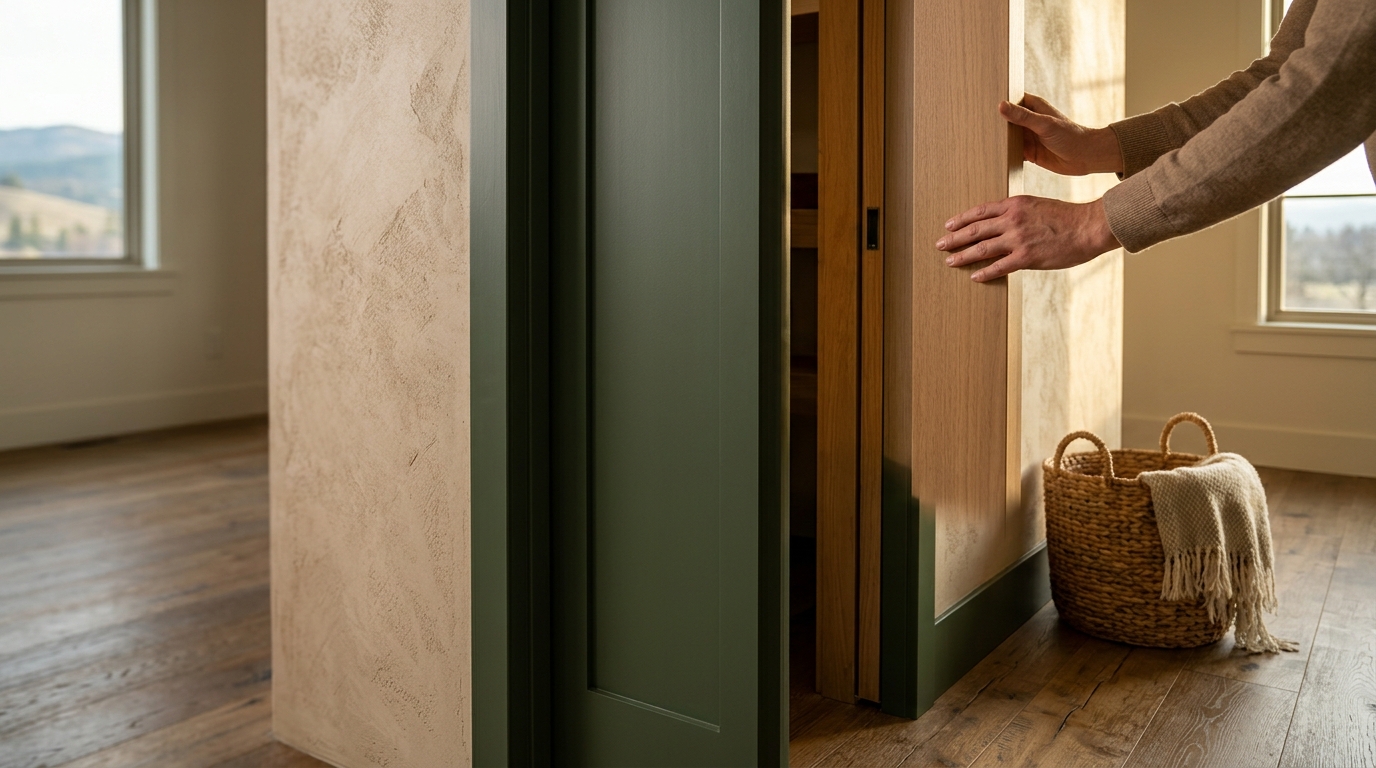
For most projects, you cannot use standard barn door tracks for pocket doors because the mechanical systems are fundamentally different. Barn doors slide on an exposed track, while pocket doors slide into a wall cavity using a specific pocket door track system. This guide explains why these systems are distinct, how to choose the right hardware, and where to find reliable supply options in Southern Oregon.
How to Choose the Right Track System
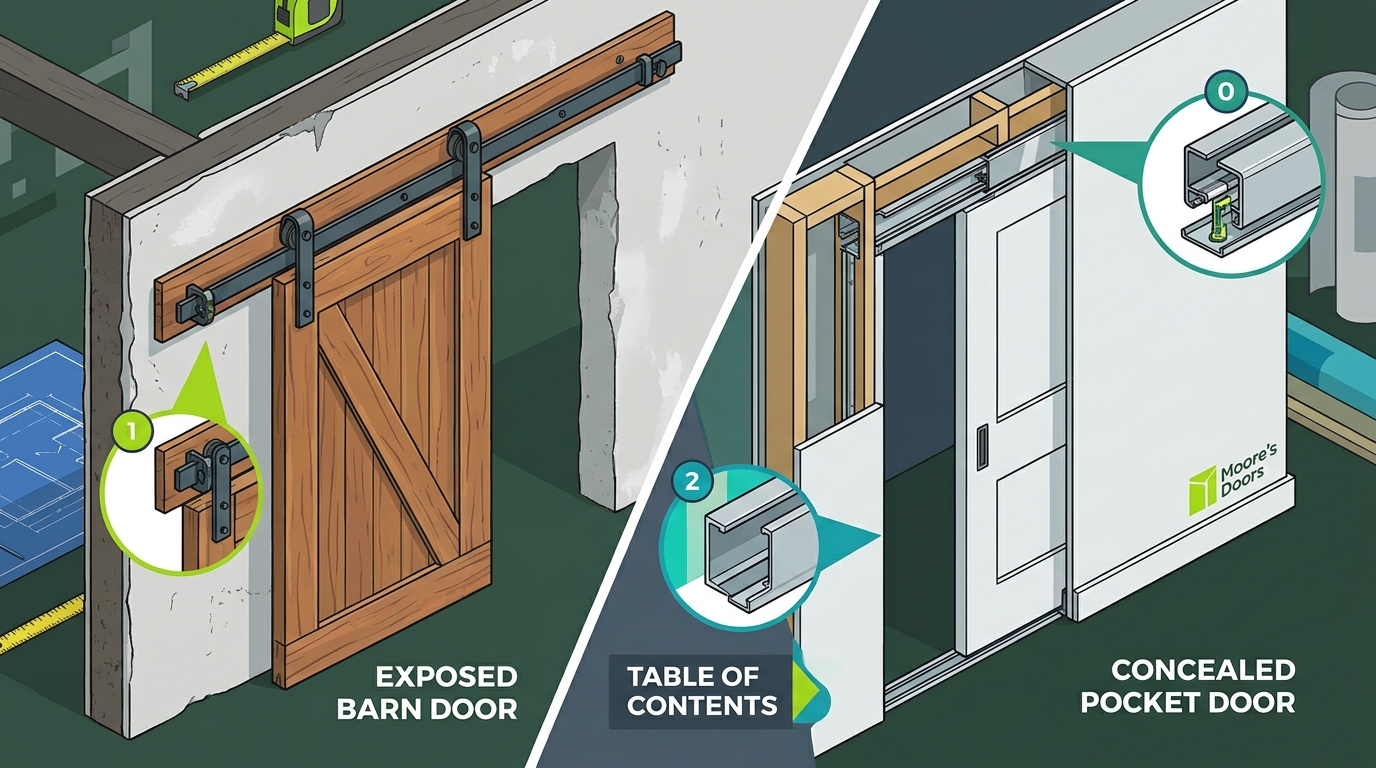
Choosing the correct track system starts with understanding the mechanical difference between the two door types. A barn door track is an exposed rail system mounted to the wall or ceiling that supports a door sliding along the exterior of the wall. A pocket door track is a concealed system that allows the door to slide into a void within the wall framing. You cannot simply swap one for the other without significant structural changes to the wall.
Wall Cavity Requirements
Pocket doors require a specific wall cavity depth, typically at least 6 inches, to accommodate the door slab and the track mechanism. If you are working with a standard 2x4 wall, you may need to build a furr wall or use a specific shallow-profile pocket door system. Barn doors, by contrast, require no wall cavity depth but do require clear floor space for the door to swing or slide across the opening.
Load Capacity and Door Weight
What to Ask Before Committing
Before purchasing any track system, you need to gather specific data about your opening and the door itself. This information ensures the hardware you buy will actually fit and function correctly.
- What is the rough opening width and height? Measure from the inside of the framing to the inside of the framing. Do not rely on the door slab dimensions alone.
- What is the wall cavity depth? For pocket doors, this is critical. Measure from the finished wall surface to the opposite side of the cavity.
- What is the total weight of the door? If you do not have the door yet, estimate based on the material and size, or ask the supplier for weight guidelines.
- Is the wall framing standard or non-standard? Check for studs, blocking, and any obstructions like electrical boxes or plumbing within the cavity.
How to Verify Compatibility and Claims
Marketing materials often use broad terms that can be misleading. To verify that a track system is suitable for your project, you should check the manufacturer's technical specifications rather than relying on product titles alone.
Check the Roller Mounting System
Some pocket door systems require the rollers to be mounted to the top of the door, while others use a different attachment method. Verify that the mounting hardware is compatible with your specific door slab. If you are using a custom door, ensure the top edge is prepared correctly for the roller attachment.
Confirm the Track Length
The track length must be sufficient to allow the door to slide fully into the wall. A common mistake is buying a track that is too short, which prevents the door from closing completely. Measure the distance the door needs to travel and add a buffer for smooth operation.
How the Installation Process Works
Installing a pocket door system is a multi-step process that requires precision. The general workflow involves preparing the wall cavity, mounting the track, installing the rollers, and hanging the door.
- Prepare the Wall Cavity: Ensure the cavity is clear of obstructions and the framing is square and level. Install any necessary blocking or furring strips.
- Mount the Track: Secure the track to the top of the wall cavity. This must be perfectly level to ensure the door slides smoothly without binding.
- Install the Rollers: Attach the roller assemblies to the top of the door slab. Adjust the height so the door hangs correctly within the track.
- Hang the Door: Lift the door onto the track and secure it. Adjust the rollers to ensure the door slides freely and closes flush with the wall.
- Install the Guide and Stop: Add a floor guide or stop to prevent the door from swinging out when open.
The entire process can take several hours to a full day, depending on the complexity of the wall and the experience of the installer. It is a task that requires careful measurement and attention to detail.
What It Costs and Price Drivers
The cost of a pocket door track system varies based on several factors. While specific prices fluctuate, understanding the cost drivers helps you budget accurately.
| Component | Cost Driver | Impact on Price |
|---|---|---|
| Track Material | Steel vs. Aluminum | Steel is generally more durable and expensive; aluminum is lighter and often less costly. |
| Roller Quality | Bearing Type and Load Rating | Higher-quality rollers with sealed bearings cost more but last longer and operate smoother. |
| System Complexity | Single vs. Double Door | Double pocket door systems require more track and hardware, increasing the overall cost. |
| Customization | Non-Standard Sizes | Custom-cut tracks or specialty mounting hardware can add to the base price. |
When budgeting, remember to include the cost of the door slab, any necessary wall modifications, and professional installation if you are not doing the work yourself.
Common Mistakes and How to Avoid Them
Many pocket door projects fail due to avoidable errors in planning or installation. Here are the most common issues and how to prevent them.
Incorrect Track Length
Buying a track that is too short is a frequent mistake. Always measure the required travel distance and add a few inches for adjustment. A track that is too long can be cut, but a track that is too short cannot be extended.
Ignoring Wall Cavity Depth
Assuming a standard wall can accommodate a pocket door without checking the cavity depth leads to frustration. If the cavity is too shallow, the door will not slide in fully. Measure the depth before purchasing any hardware.
Poor Leveling
If the track is not perfectly level, the door will bind or sag. Use a high-quality level and take your time during installation. A few minutes of careful leveling saves hours of troubleshooting later.
Barn Door Tracks vs. Pocket Door Tracks
Understanding the differences between barn door and pocket door tracks helps you choose the right system for your space.
| Feature | Barn Door Track | Pocket Door Track |
|---|---|---|
| Visibility | Exposed track on wall or ceiling | Concealed within wall cavity |
| Space Usage | Requires clear floor space for door to slide | Saves floor space by sliding into wall |
| Wall Modification | Minimal; mounts to existing wall surface | Requires specific wall cavity depth and framing |
| Aesthetic | Industrial or rustic look | Seamless, modern look |
| Installation Complexity | Generally simpler | More complex; requires precision |
Barn doors are often chosen for their aesthetic appeal and ease of installation. Pocket doors are chosen for their space-saving benefits and seamless appearance. The right choice depends on your design goals and the constraints of your wall structure.
Specific Situations: New Construction vs. Remodel
The approach to installing pocket doors differs significantly between new construction and remodeling projects.
New Construction
In new construction, you have the advantage of planning the wall framing specifically for the pocket door. This allows for optimal cavity depth and easy access for installation. It is the ideal scenario for pocket doors because you can build the wall to accommodate the hardware perfectly.
Remodeling
In remodeling, you are working with existing walls. This may require opening up the wall to check the cavity depth and framing. If the existing wall is not suitable, you may need to build a furr wall or choose a different door type. Remodeling projects require more assessment and potential modification of the existing structure.
Rules, Codes, and Protections
While pocket doors are not heavily regulated by building codes in most residential applications, there are some considerations to keep in mind.
Fire Ratings
If the door is required to be fire-rated, you must use a certified fire-rated pocket door system. Standard pocket door tracks may not meet fire code requirements. Check with your local building department if the door is in a fire-rated wall.
Accessibility
If the door is in a space that must be accessible, ensure that the door can be opened and closed with minimal force. Some pocket door systems require more force to operate than others. Consider the needs of all users when selecting the hardware.
Local Specifics for the Rogue Valley
For customers in the Rogue Valley, local supply options provide significant advantages in terms of support and availability. Moore's Doors in Medford offers a wide selection of door hardware, including tracks and rollers for both barn and pocket doors. The local team can help you verify compatibility and provide guidance on installation.
Visiting a local showroom allows you to see the hardware in person and ask specific questions about your project. This hands-on approach can save time and prevent costly mistakes. The Rogue Valley's climate and building practices may also influence the choice of materials, with local suppliers often having experience with regional conditions.
Timing Your Project
Timing is a critical factor in any door installation project. For pocket doors, it is best to order the hardware early in the planning phase. This allows time for the hardware to arrive and for any necessary wall modifications to be completed.
If you are working with a contractor, coordinate the delivery of the hardware with the construction schedule. Delays in hardware delivery can stall the entire project. Ordering early and confirming lead times with the supplier helps ensure a smooth workflow.
Long-Term Results and Maintenance
Properly installed pocket doors provide a seamless, space-saving solution that lasts for years. The key to long-term performance is regular maintenance and initial quality.
Maintenance Tips
- Clean the Track: Dust and debris can accumulate in the track, causing the door to bind. Clean the track regularly with a soft cloth.
- Lubricate the Rollers: Apply a silicone-based lubricant to the rollers periodically to ensure smooth operation.
- Check the Alignment: Over time, the door may shift slightly. Check the alignment and adjust the rollers if necessary.
By following these maintenance steps, you can extend the life of your pocket door system and ensure it continues to operate smoothly. High-quality hardware from a reputable supplier is the foundation of a durable installation.
Key Takeaways
- Barn door tracks and pocket door tracks are not interchangeable; they serve different mechanical functions.
- Pocket doors require a specific wall cavity depth, typically at least 6 inches.
- Always measure the rough opening, wall cavity depth, and door weight before purchasing hardware.
- Verify the track length and roller mounting system to ensure compatibility with your door slab.
- Common mistakes include incorrect track length, ignoring wall cavity depth, and poor leveling.
- New construction is the ideal scenario for pocket doors, while remodeling requires more assessment.
- Local suppliers like Moore's Doors in Medford provide valuable support and product availability for Rogue Valley projects.
- Regular maintenance, including cleaning and lubrication, ensures long-term performance.
Frequently Asked Questions
Can I use a barn door track for a pocket door?
No, you cannot use a standard barn door track for a pocket door. Barn door tracks are exposed and mount to the wall surface, while pocket door tracks are concealed and mount within the wall cavity. The mechanical systems are fundamentally different and not interchangeable.
What is the minimum wall cavity depth for a pocket door?
The minimum wall cavity depth for a standard pocket door is typically 6 inches. Some shallow-profile systems may require less, but 6 inches is the standard recommendation to ensure the door slides in fully and operates smoothly.
Where can I find pocket door tracks in Southern Oregon?
You can find pocket door tracks at local suppliers like Moore's Doors in Medford. They offer a wide selection of door hardware and can provide guidance on compatibility and installation for projects in the Rogue Valley.
How long does it take to install a pocket door?
Installing a pocket door can take several hours to a full day, depending on the complexity of the wall and the experience of the installer. The process involves preparing the wall cavity, mounting the track, installing the rollers, and hanging the door.
What is the difference between a slab and a prehung door?
A slab is the door panel without an attached frame, while a prehung door comes attached to its frame with hinges. For pocket doors, you typically use a slab because the frame is part of the pocket door system. The slab must be prepared with the correct roller mounting holes.
Do I need a professional to install a pocket door?
While it is possible to install a pocket door yourself, it requires precision and attention to detail. Many homeowners choose to hire a professional to ensure the door is installed correctly and operates smoothly. A professional can also help with any necessary wall modifications.
How do I maintain a pocket door system?
To maintain a pocket door system, clean the track regularly to remove dust and debris. Lubricate the rollers periodically with a silicone-based lubricant. Check the alignment of the door and adjust the rollers if necessary to ensure smooth operation.
Can I add a pocket door to an existing wall?
It depends on the wall cavity depth and framing. If the existing wall has sufficient depth and the framing is suitable, you may be able to add a pocket door. However, you may need to open up the wall to check the cavity and make any necessary modifications. A qualified contractor should evaluate the feasibility.